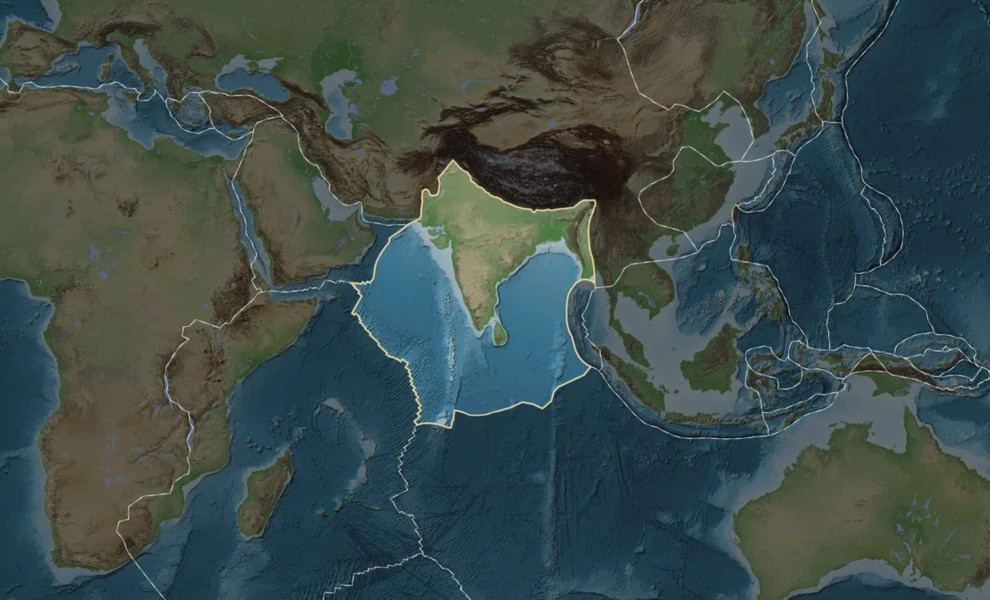
A recent scientific study has identified internal deformation within the Indian tectonic plate, which was long believed to be a stable and highly rigid geological structure. Researchers said the findings could improve understanding of geological activity and long-term land movement across the Indian subcontinent.
According to the study, scientists observed greater structural deformation in regions located north of the Narmada-Son belt in central India. In comparison, southern parts of India were found to remain relatively stable with fewer internal changes.
Experts explained that the Indian tectonic plate was traditionally considered a single, solid rock mass with uniform rigidity. However, the latest observations suggest that different sections of the plate may be responding differently to underground geological forces and pressure.
The research is expected to contribute to studies related to earthquakes, tectonic movement, and geological stability in the region. Scientists believe the findings may help improve future models used to understand seismic activity and continental movement.
Researchers also noted that continuous monitoring and geological analysis will be necessary to better understand how these internal deformations could affect the Indian landmass over time.
The study provides fresh insight into the dynamic nature of Earth’s geological systems and highlights the importance of ongoing scientific research in understanding natural processes beneath the surface.



















0 Comments